Events
Upcoming and past events hosted by the Core. Please get in touch if you’d like to advertise a talk or organize a discussion around ongoing research, a paper, or something else.
Most talks are recorded. Contact manonragonnet@uchicago.edu for copies.
Cécile Tran Kiem on SARS-CoV-2 saltational events
Cécile Tran Kiem
Research Fellow, Imperial College London
The CEIRR CMC holds bi-monthly research seminars that feature leading researchers who develop state-of-the-art computational methods to better understand respiratory viruses. These events are designed to facilitate in-depth discussions and provide ample opportunity for questions from the audience, with each seminar lasting 1 hour and 30 minutes.
Title: SARS-CoV-2 saltational events are recurrent and trace to persistent human infections
SARS-CoV-2 evolution is characterized by gradual mutation accumulation but has been punctuated by rare yet impactful highly mutated variants. Whether such saltational jumps are a broad feature of SARS-CoV-2 evolution or rare anomalies remains unclear. We systematically investigate SARS-CoV-2 saltational evolution by developing a scalable framework to detect saltational events from 4.4 million high-quality viral genomes. Saltational events occurred at low but detectable rates during the pandemic and post-pandemic periods and across geographies. Their mutational signature closely matches that seen in persistent human infections but is inconsistent with the signatures of mink or deer infections. This points to persistent infection, rather than reverse zoonosis, as their primary source. While most saltational events lack evidence of onward transmission, those that do tend to carry mutations found in successful clades. Our work demonstrates that the emergence of highly mutated SARS-CoV-2 variants reflects a recurrent evolutionary process, with implications for preparedness.
After you register, click on the Eventbrite event page for a zoom link.
Note: CEIRR CMC events are open only to CEIRR participants. The meeting and discussion are confidential.
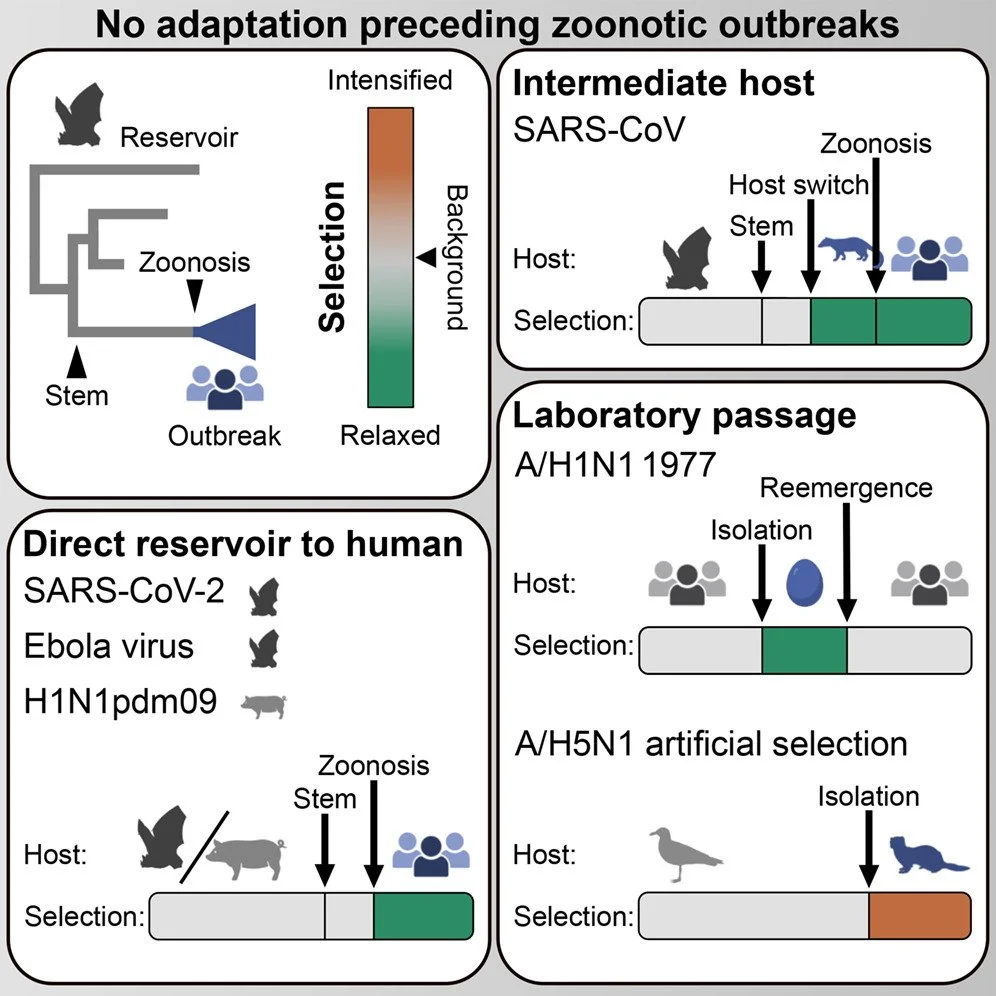
Jennifer Havens on selection dynamics preceding emergent virus epidemics
Jennifer Havens
Postdoctoral fellow, NIH
The CEIRR CMC holds bi-monthly research seminars that feature leading researchers who develop state-of-the-art computational methods to better understand respiratory viruses. These events are designed to facilitate in-depth discussions and provide ample opportunity for questions from the audience, with each seminar lasting 1 hour and 30 minutes.
Title: Selection and clock dynamics preceding the emergence of viral epidemics and variants
This seminar will discuss the application of a multi-partition selection model (RELAX), to pandemic/epidemic viruses in the host reservoir, prior to emergence, and after emergence. Examining the emergence of Ebola virus, Marburg virus, mpox virus, influenza A virus (pdm09), and SARS-CoV-2, there is no evidence of a change in selection intensity immediately prior to outbreaks in humans compared with typical selection within reservoir hosts, suggesting extensive pre-zoonotic adaptation is not necessary for human-to-human transmission of zoonotic viruses. To address reassortment and recombination, the existing RELAX framework has been extended to capture multiple evolutionary histories (trees) with one model.
This seminar will also present using a synonymous molecular clock inferred in a Bayesian framework (BEAST) to characterize evolution in different environments (prior to variant emergence, typical human-to-human transmission, intra-host evolution, and non-human animal hosts) of SARS-CoV-2. Molecular clock dynamics during intra-host evolution can match what is seen prior to variant emergence, while evolution during typical transmission and in non-human hosts appear differently. This finding supports the hypothesis that persistent infections were the likely source of many SARS-CoV-2 variants.
After you register, click on the Eventbrite event page for a zoom link.
Note: CEIRR CMC events are open only to CEIRR participants. The meeting and discussion are confidential.
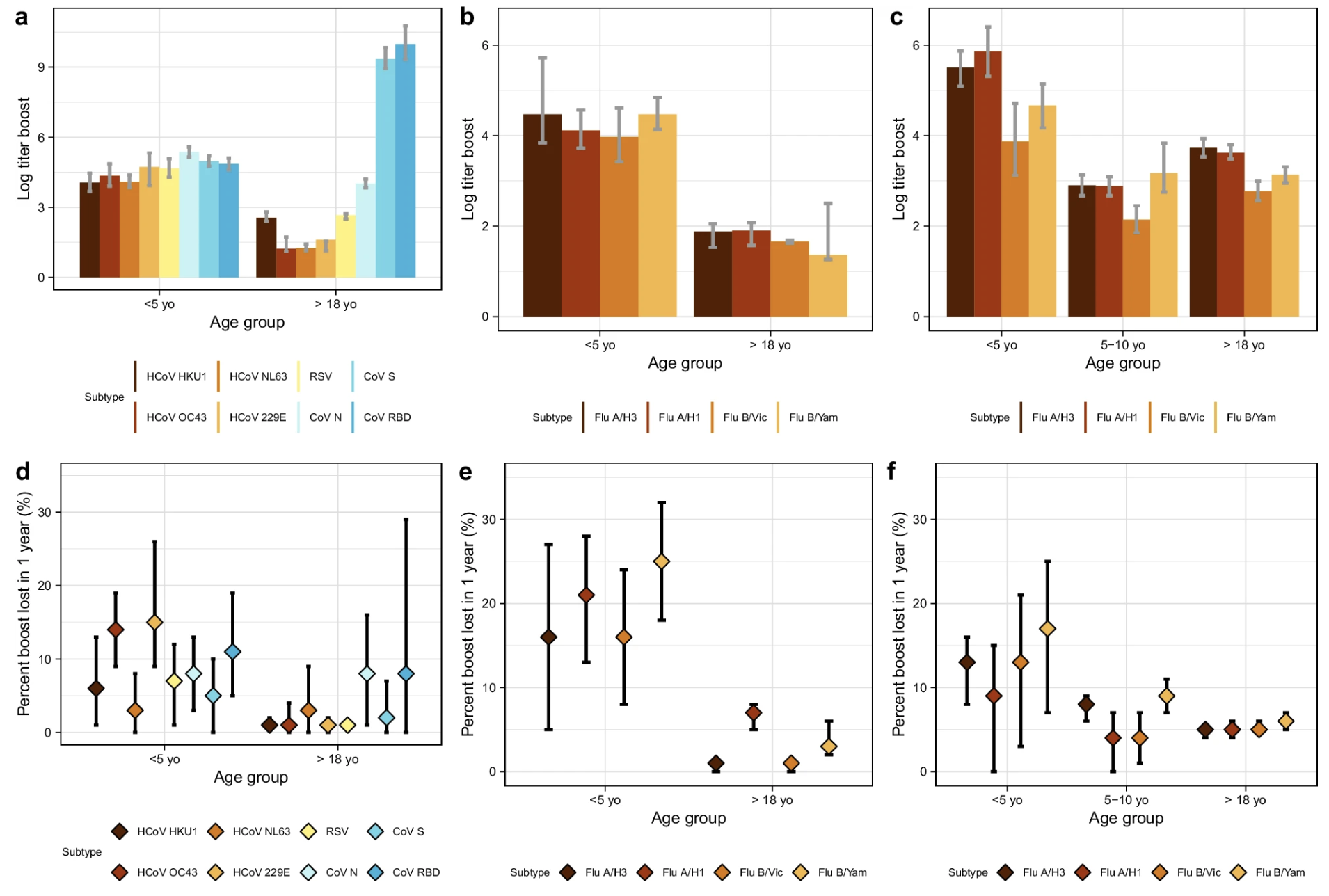
Samantha Bents on age-specific immunodynamics and their impact on epidemics
Registration coming soon


CEIRR Network Meeting 2026 Tool Showcase
A breakout session showcasing new computational tools and methods developed across the CEIRR network.


CEIRR Network Meeting 2024 Tool Showcase
Prof Sarah Cobey (U. Chicago) leads a breakout session showcasing new computational tools. Katia Koelle, Jordan Ort, Yiquan Wang, Zane Billings, Alexey Markin, Carl Hutter and Tavis Anderson prsent their new tools and methods on H5 nextclade assignment, transmission bottleneck estimation, models for censored immunological data, reassortment inference, predicting adaptive immune receptors, phylogenetic libraries, and pipelines for calling SNVs.


